2025–2026 - YEAR ONE OF TRANSFORMATION A year of strengthening patient care, empowering staff, modernising systems and building the foundation for the next phase of KNH’s transformation.
STAFF confirmed to permanent and pensionable terms
0
REVENUE GROWTH through stronger financial management and SHA reforms
0
FUNCTIONAL THEATRES expanding access to specialised and emergency surgery
0
CENTRES OF EXCELLENCE in the long-term specialised healthcare strategy
0
TRANSFORMING PATIENT CARE
International Trauma Centre
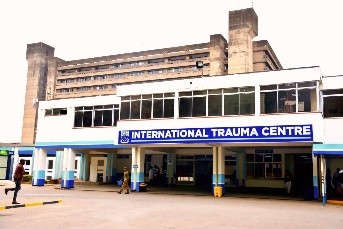
One of the most visible changes in emergency care was the transformation of the former Accident & Emergency Department into the International Trauma Centre (ITC).
The transformation strengthened the hospital’s capacity to manage trauma, emergencies and mass-casualty incidents while improving patient flow.
Key changes included:
Oxygen points increased from 34 to 72.
Trauma, emergency, and outpatient services were separated to improve patient flow.
Emergency preparedness was strengthened for road crashes, fires, demonstrations, and other mass-casualty incidents.
Weekly emergency attendance increased from approximately 400–500 to 700–900 patients.
Critical Care & Oncology
Critical care capacity was expanded, with the hospital working towards increasing ICU capacity from 93 to 120 beds and adding 10 Critical Care Unit beds at the Prime Care Centre.
Oncology was also prioritised as a flagship Centre of Excellence. The existing Linear Accelerator was repaired, and a new LINAC installed, strengthening access to radiotherapy services.
SURGICAL EXCELLENCE
Expanding access to specialised surgery
The hospital reviewed and optimised theatre operations, increasing functional operating theatres to 32 and improving scheduling and utilisation.
This was accompanied by a series of landmark specialised procedures, demonstrating the depth of clinical expertise available at KNH.
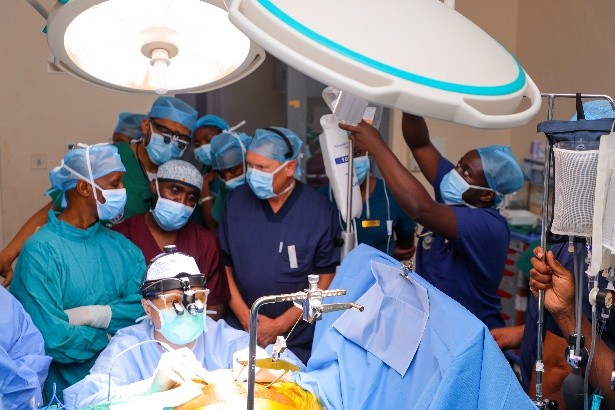
Off-Pump Coronary Artery Bypass (OPCAB) theatre procedure during the KNH-KIBOS cardiac mission
Landmark procedures included:
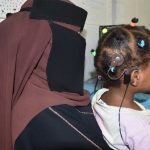
• Advanced cochlear implant surgery
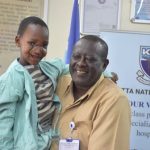
• World-first complex craniofacial reconstruction on a six-year-old child
• Kenya’s first orbital–facial prosthesis in a public hospital
• Record 20.86 kg gigantomastia surgery on a teenager
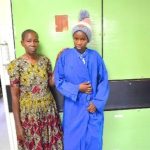
Lydia Musivi (R) with her mother after the successful gigantomastia surgery.
PUTTING THE PATIENT AT THE CENTRE
Improving clinical services was accompanied by efforts to make the patient’s journey through KNH easier, more responsive, and more dignified.
Listening and responding
Direct complaint lines were introduced for the CEO, Senior Director Clinical Services and Director of Nursing.
Complaint investigation timelines were strengthened.
Work began towards establishing a dedicated Public Complaints Department in collaboration with the Ombudsman.
Improved directional signage was installed to make navigation easier.
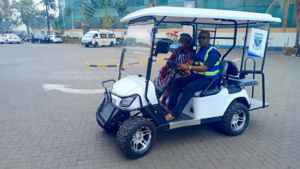
Golf-cart transport was introduced for elderly and critically ill patients, with more than 3,000 patients benefiting.
Golf cart transport services for the elderly and critically ill patients at the ITC.
EMPOWERING OUR PEOPLE
1,600 staff confirmed
One of the most significant workforce reforms during the year was the conversion of 1,600 employees to permanent and pensionable terms.
The reform strengthened job security, pension access, career progression and staff morale.
Strengthening Nursing leadership
Nursing was elevated to a full Directorate, with the Director of Nursing reporting directly to the CEO.
Nursing management positions were also reorganised from 136 to 96, strengthening frontline supervision, accountability, and deployment of specialist nurses.
A culture of engagement
Regular engagement platforms were strengthened, including:
CEO Kamkunji meetings
Departmental meetings
Executive Council engagements
Clinical Leadership Council meetings
Structured dialogue was also maintained with KNUN, KMPDU, KUDHEIHA and SRC on staff welfare, remuneration and industrial relations.
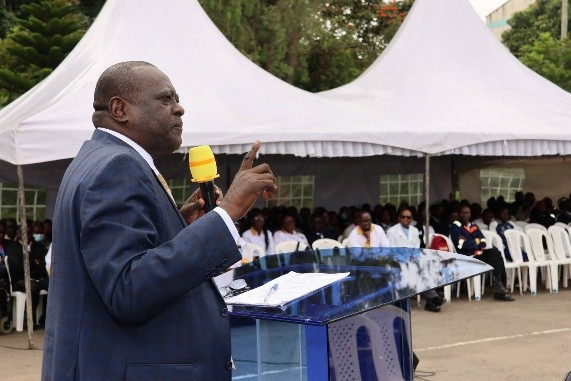
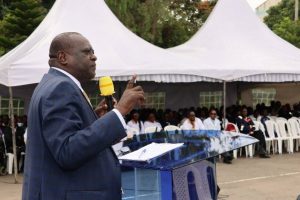
KNH CEO Dr. Richard Lesiyampe, CBS addressing members of staff during staff engagement forum at the Administration Block Grounds.
INVESTING IN STAFF WELFARE
Building a better workplace
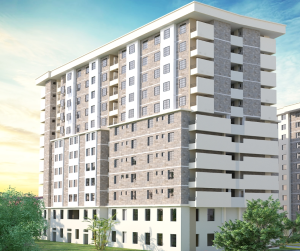
KNH commenced construction of 2,000 institutional housing units, while advancing plans for another 2,000 units through a PPP arrangement.
The KNH Superannuation Scheme also underwent actuarial review to strengthen long-term retirement planning for employees.
Graphical representation of the housing project the Hospital is about to undertake.
BUILDING A FINANCIALLY SUSTAINABLE KNH
15% growth in revenue
KNH achieved a 15% increase in revenue collection, supported by stronger departmental ownership and financial accountability.
SHA reforms
A dedicated SHA Office was established to strengthen:
Claims verification
Claims reconciliation
Revenue tracking
Reduction of rejected claims
Prime Care Centre turnaround
The revitalisation of the Prime Care Centre has unlocked significant new revenue streams for KNH, strengthened utilisation of the facility and enhanced the hospital’s capacity to deliver high-quality, patient-centred care.
Procurement reforms also included reviewing pricing, strengthening supply-chain oversight and establishing a committee to prioritise supplier payments and improve value for money.
We use cookies to ensure that we give you the best experience on our website. If you continue to use this site we will assume that you are happy with it.